
Built from a real application
The examples come from the companion angular-rag-demo, so every section stays grounded in UI behavior and implementation choices.
A 90-Page Practical Architecture and Implementation Guide
Learn how a practical RAG system comes together from chunking and retrieval to context assembly, grounded answers, and evaluation, using a real application instead of abstract slides.
RAG as a full system: ingest, retrieval, context assembly, and grounded answers
Corpus design and chunking strategies, including practical trade-offs
Retrieval stack composition with vector search, BM25 baseline, and RRF fusion
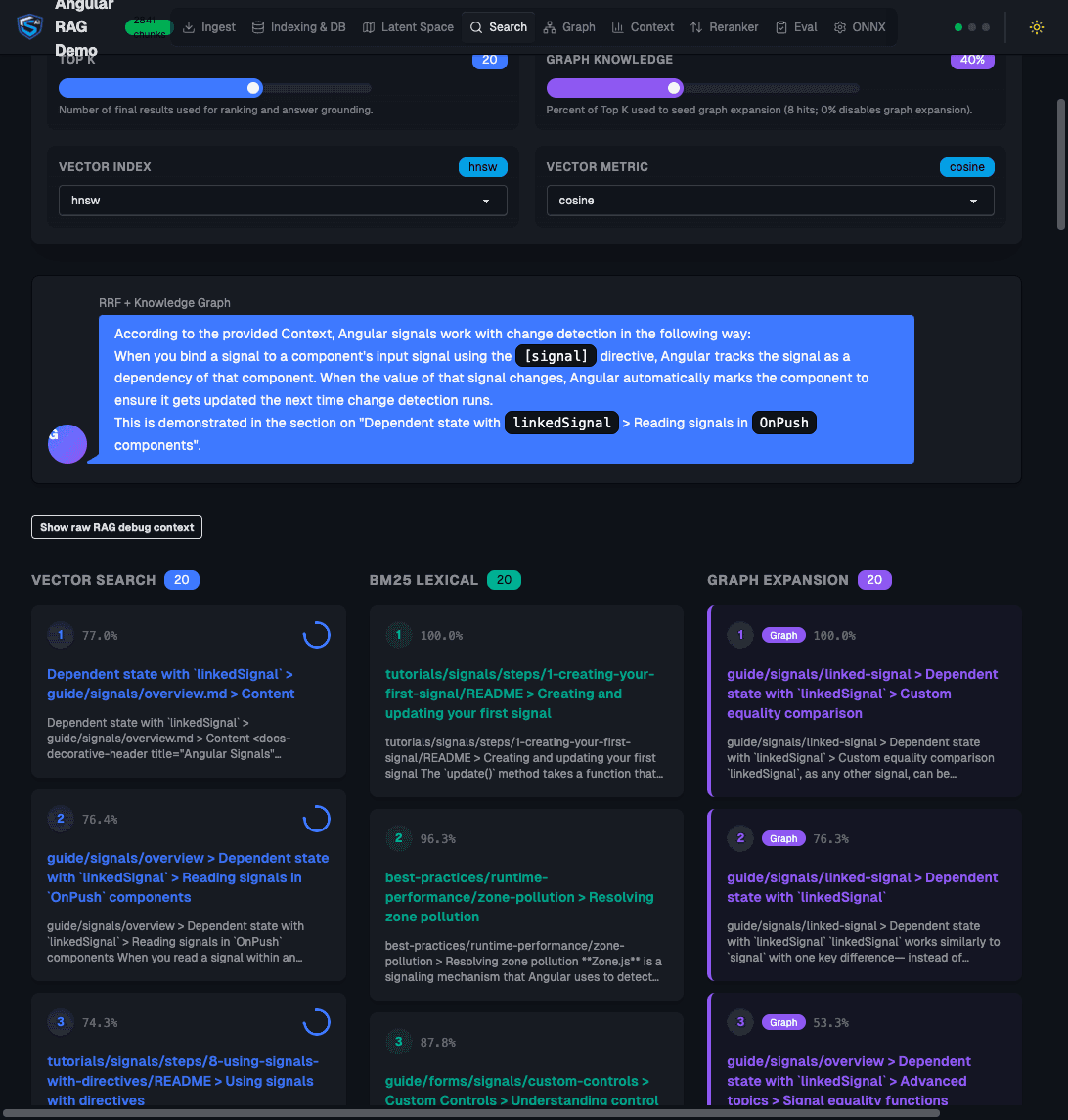
The examples come from the companion angular-rag-demo, so every section stays grounded in UI behavior and implementation choices.
The guide focuses on ranking quality, token budgets, evaluation, and trade-offs rather than one-off prompting tricks.
It helps senior engineers and architects decide which retrieval layers are worth their complexity before shipping to production.
RAG as a full system: ingest, retrieval, context assembly, and grounded answers
Corpus design and chunking strategies, including practical trade-offs
Retrieval stack composition with vector search, BM25 baseline, and RRF fusion
Knowledge graph expansion and cross-encoder reranking for quality gains
Context-window engineering with token budgeting and prompt context design
Evaluation workflow and production defaults for reliable deployment
Ch. 0-3
Start with privacy, threat modeling, and the full RAG pipeline so retrieval quality is framed as a systems problem from day one.
Ch. 4-9
Work through embedding space intuition, vector search, BM25, reciprocal rank fusion, graph expansion, and reranking with practical examples.
Ch. 10-13
Finish with context engineering, grounded answer generation, evaluation metrics, and production-ready defaults you can reuse in your own stack.
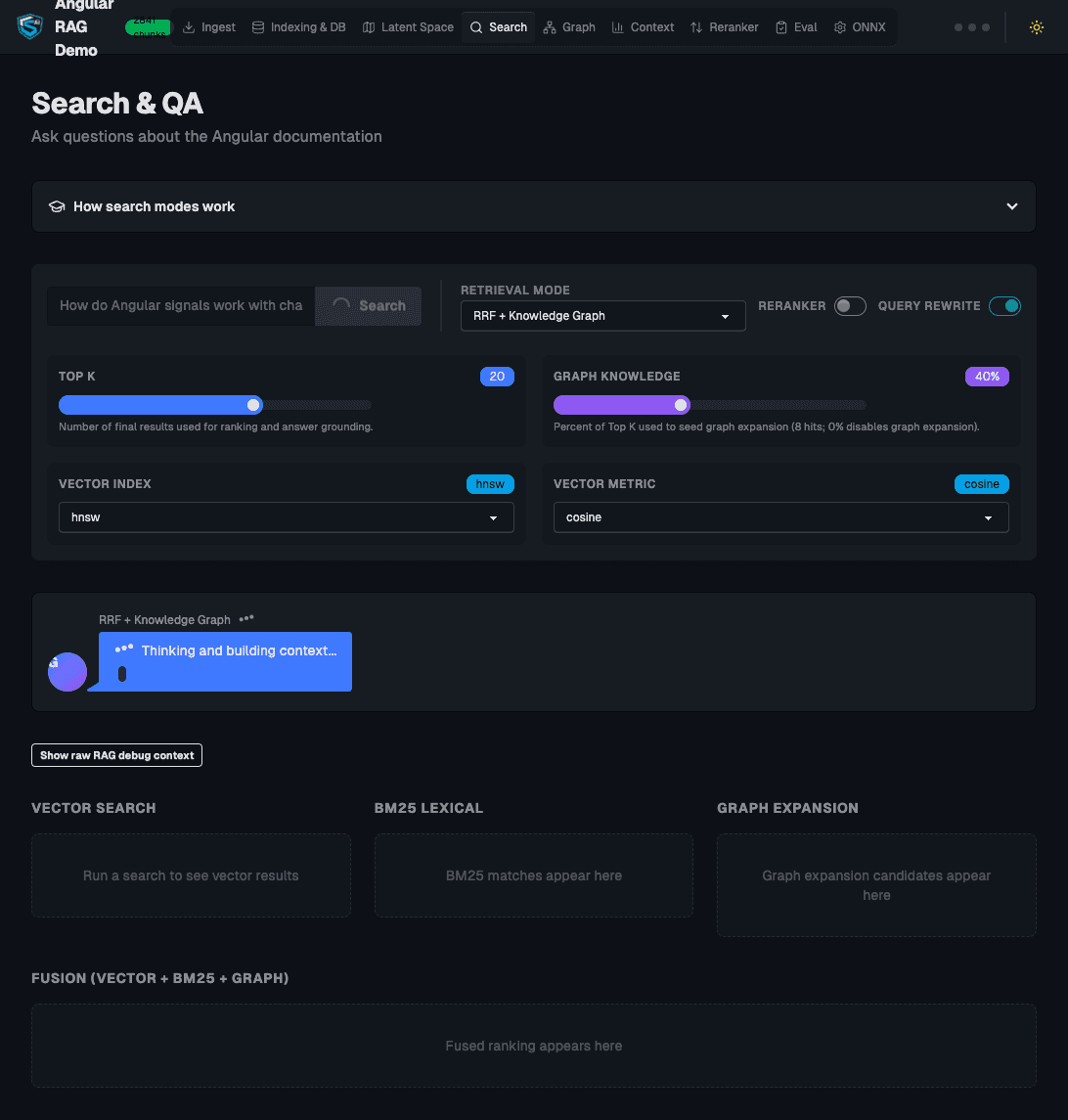
See how retrieval context, prompt constraints, and the final grounded answer fit together in one view.
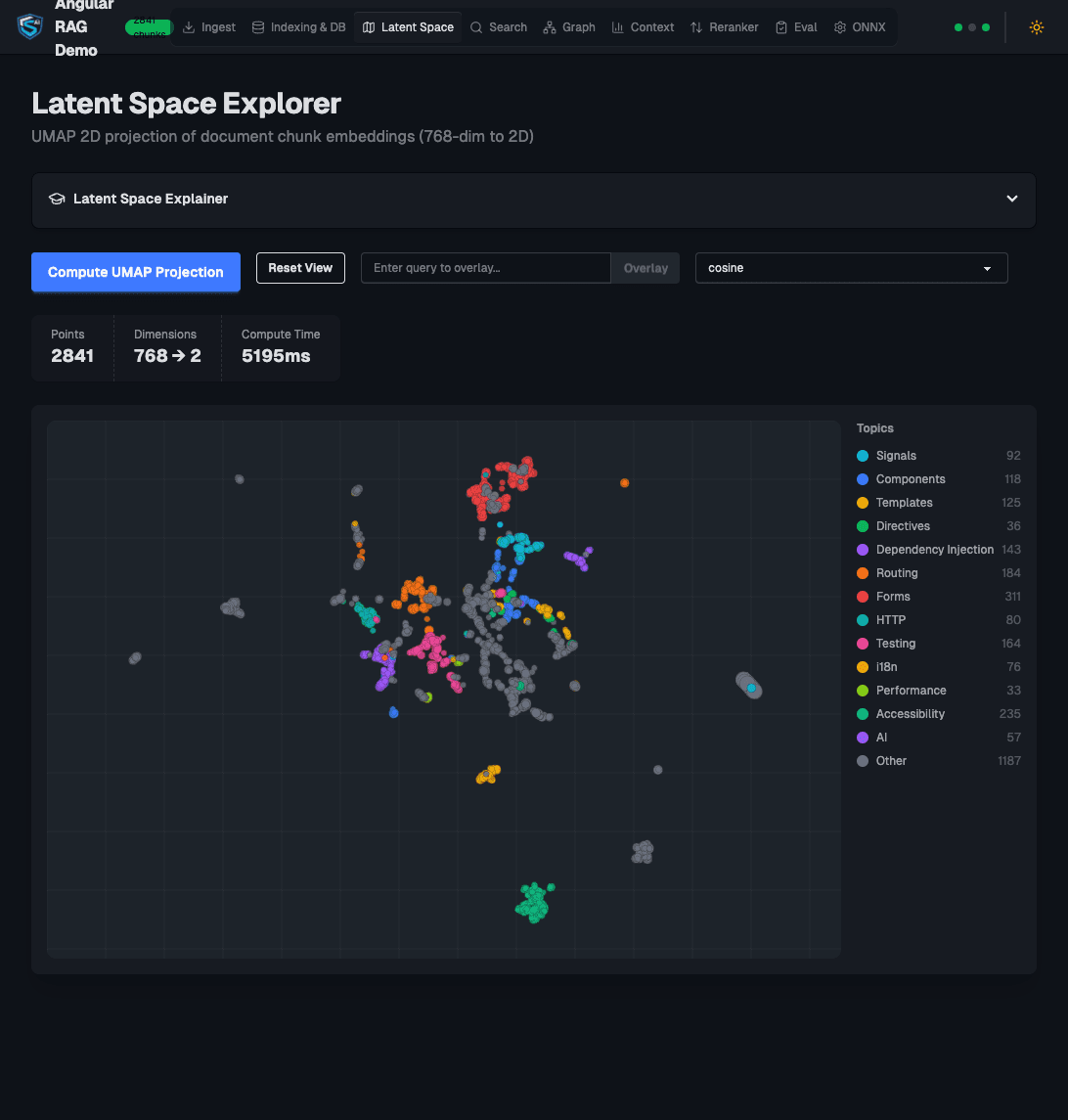
The latent-space view makes chunk similarity and query proximity easier to reason about than raw vectors alone.
Vector, BM25, graph expansion, and fusion results are shown together so trade-offs stay concrete.
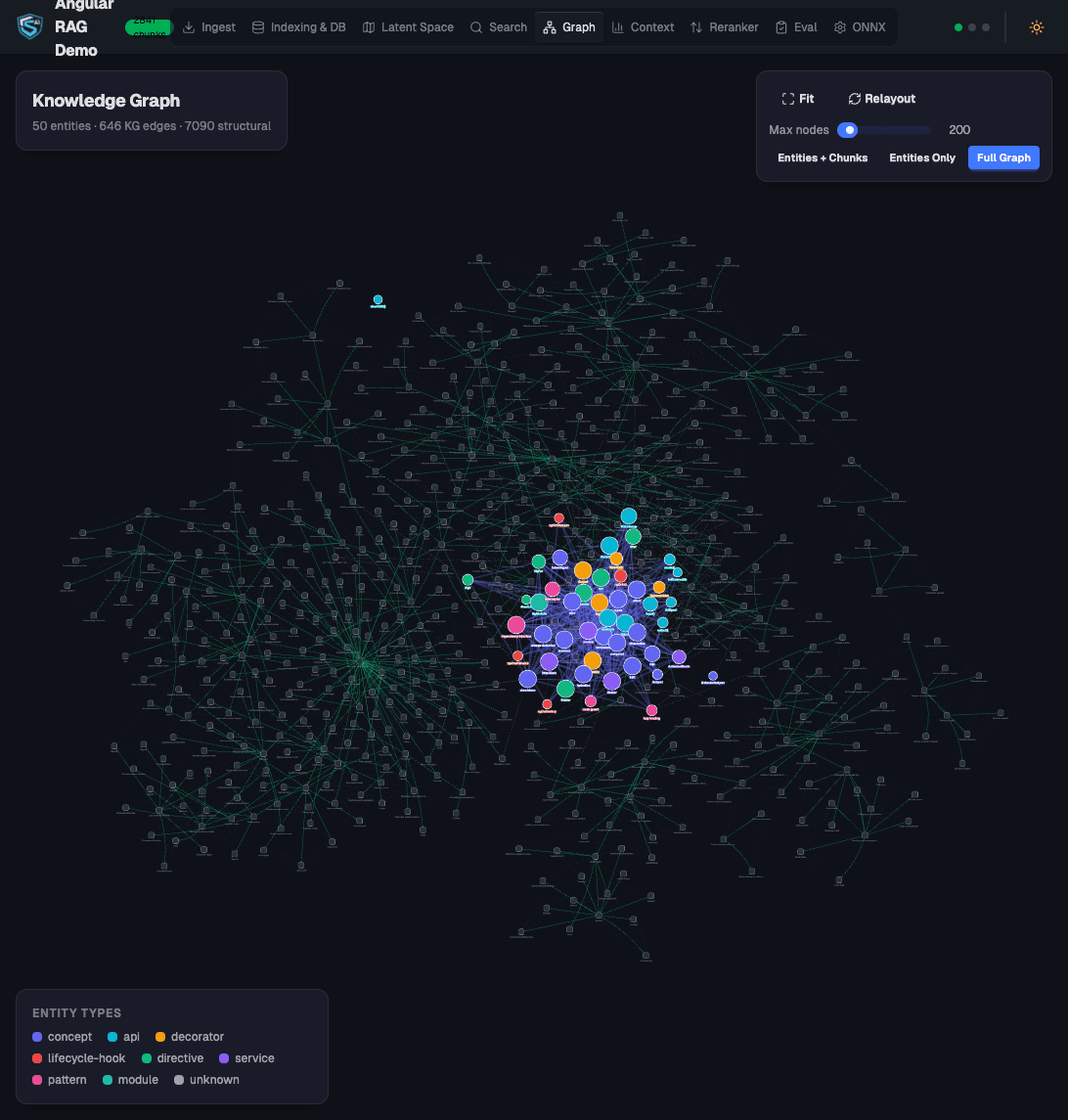
The guide explains when graph signals improve recall and when they simply add noise to the pipeline.
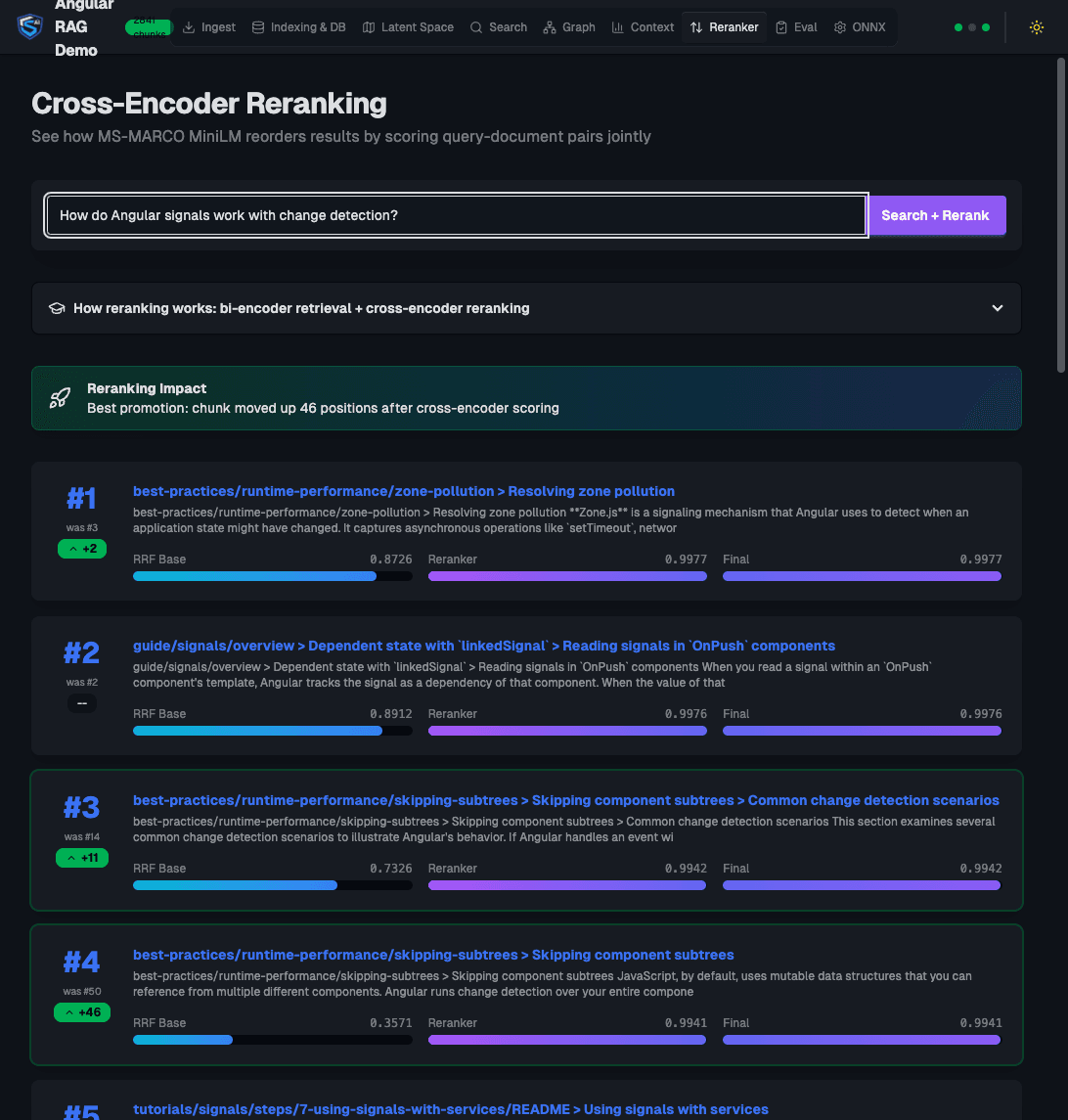
Follow rank movements and score shifts to understand where cross-encoder reranking actually earns its cost.
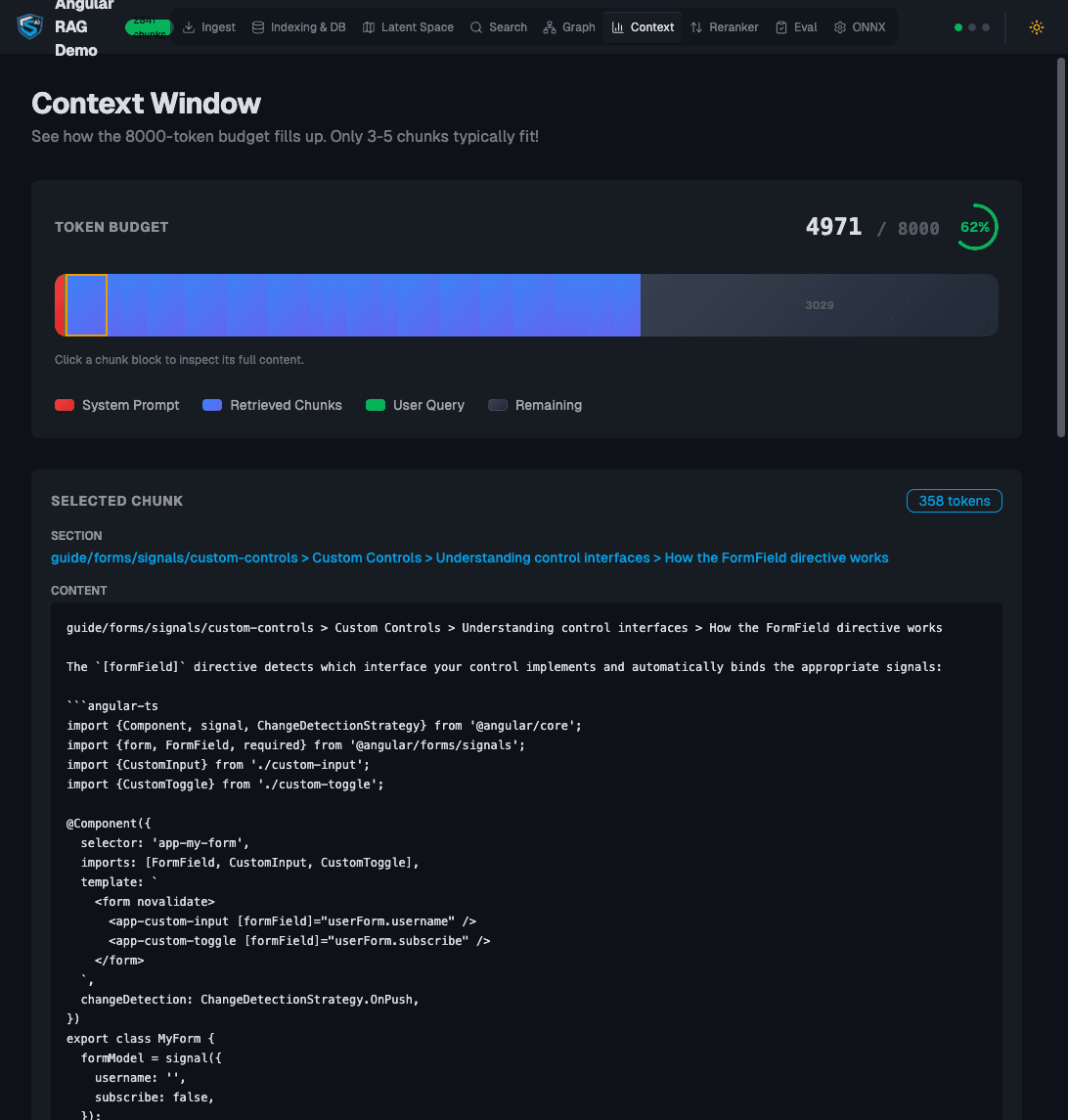
Context-window planning is treated as an engineering system, not a prompt-writing afterthought.
A practical 90-page guide to designing private AI search and retrieval-augmented generation systems in TypeScript.
Instead of isolated tricks, the book explains the complete retrieval pipeline from corpus and chunking decisions to ranking quality, context assembly, grounded answers, and evaluation.
Each chapter connects concept, trade-off, and implementation detail using concrete examples and screenshots from the angular-rag-demo application.
Built for engineering teams responsible for enterprise AI outcomes: senior developers implementing RAG services, solution architects defining system boundaries, and AI platform leads standardizing quality and governance. If your team must deliver trustworthy internal copilots with measurable retrieval quality, controlled cost, and production-ready safety defaults, this guide is designed for you.
Subscribe to receive your personalized copy and future practical engineering notes from Soverius AI.
Free PDF download with real product screenshots.
Newsletter confirmation required before delivery.
Unsubscribe anytime.